
20 Years of Undergraduate Environmental Engineering
In the fall of 2006, Georgia Tech officially launched its bachelor’s degree in environmental engineering. Twenty years later, the undergraduate program is thriving and ranked No. 1 in the nation.
Over the past two decades, Georgia Tech has become a leader in environmental engineering education. More commonly offered as a graduate degree, many other top engineering universities have only recently started to offer bachelor’s degrees in environmental engineering or don’t have them at all.
“We were fortunate to recognize the opportunity early and act decisively 20 years ago,” said School of Civil and Environmental Engineering Chair Don Webster. “The program has developed into a strong and enduring asset, and I’m proud of its continued success and growth.”
In that first semester, 11 undergraduates enrolled in the environmental engineering program. Within five years, it had blossomed to 148 students. Now, the program enrolls around 200 students every year.
Since its inception, U.S. News and World Report has ranked Georgia Tech’s undergraduate environmental engineering degree in the top 10. For the first time, Georgia Tech was named the No. 1 program in the nation in 2025.
“I’m proud of the remarkable progress and sustained success we’ve achieved over the years,” Webster said. “The No. 1 ranking this year is a gratifying affirmation of that work and our continued commitment to excellence.”
How It Started
Georgia Tech had a well-established graduate program in environmental engineering dating back to the 1960s. Already, there was an accomplished faculty, staff, and experimental facilities in the School, which provided a foundation for developing a bachelor’s degree.
Plans for the bachelor’s degree began to take shape in 2003 thanks in large part to growing student demand and a new professional engineers’ exam in environmental engineering.
Armistead “Ted” Russell, the Howard T. Tellepsen Chair and Regents' Professor in environmental engineering, has been on the faculty at Georgia Tech since 1996. Russell said in the early 2000s, there was a growing awareness of environmental challenges among undergraduate students.
“This was an era when climate was really becoming of much greater interest,” Russell said. “These students came in wanting to be engineers but really wanted to focus on the environment.”
Russell said students were also becoming more aware about the negative health impacts of environmental exposures around the world.
“That's always been a driver: environmental engineering students by and large want to have a global impact,” Russell said.
In 2003, Webster was chair of the Undergraduate Curriculum Committee and was actively involved in developing the bachelor’s degree in environmental engineering.

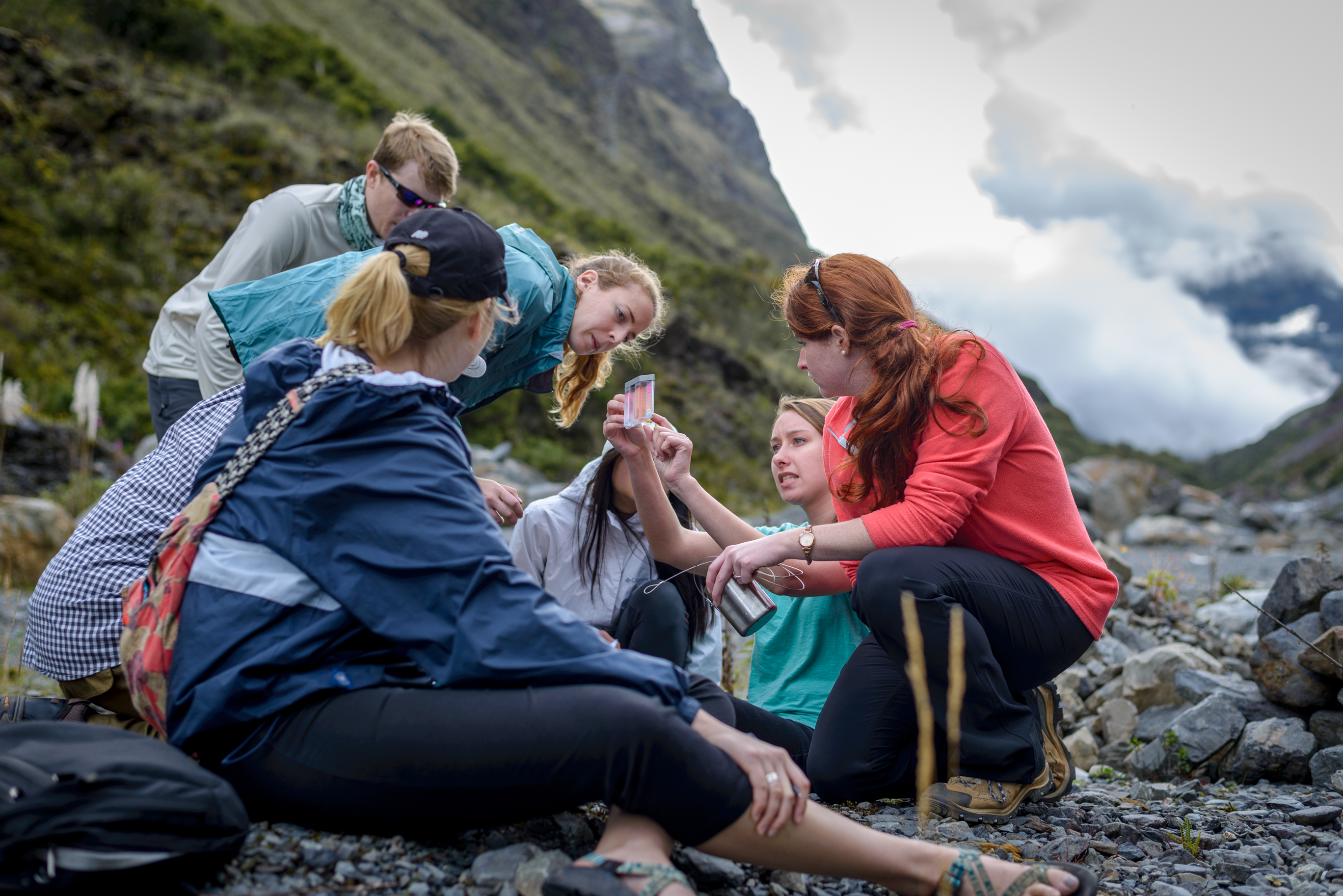
A student works in a lab during an environmental engineering trip to Bolivia in 2015.
He said another factor that led to the timing of the program was professional licensure. Georgia Tech wanted to prepare students to graduate with a bachelor’s degree and be able to successfully pass the professional engineers exam.
“The introduction of the Professional Engineer (P.E.) examination in environmental engineering created an important opportunity for our program,” Webster said. “We wanted to provide students with the knowledge and experience needed to successfully pursue licensure and advance as professionals in the field.”
The First Graduate
One of first students to major in environmental engineering was Colin Boswell, a third-year civil engineering student who decided to switch to the new major.
Despite it being a brand-new degree program, Boswell said he had no hesitation.
“I was at Georgia Tech, so I wasn't really afraid,” Boswell said. “I just was excited, because I got to focus and pivot to something that I had become passionate about.”
Once Boswell changed his major, faculty members started plotting his course of study and realized he was on track to be Georgia Tech’s first environmental engineering graduate.
The timing could not have been better: His estimated graduation date of 2008 coincided with the first major milestone for the new program, a scheduled accreditation visit in the same year.
“A key requirement for accreditation is having at least one graduate from the program,” Webster said. “At the time, Colin was that student. We followed his progress closely, knowing how important it was for both him and the program, and we were delighted when he successfully completed his degree.”

Colin Boswell, the first person to earn a bachelor's degree in environmental engineering from Georgia Tech, spoke at a celebration recognizing the 20th anniversary of the program.

The environmental engineering faculty poses for a group photo in recognition of Georgia Tech's ranking as the No. 1 undergraduate environmental engineering program in the nation.
Boswell stayed at Tech for his master’s degree in environmental engineering. He currently serves as senior manager of emission compliance strategy at Toyota North America.
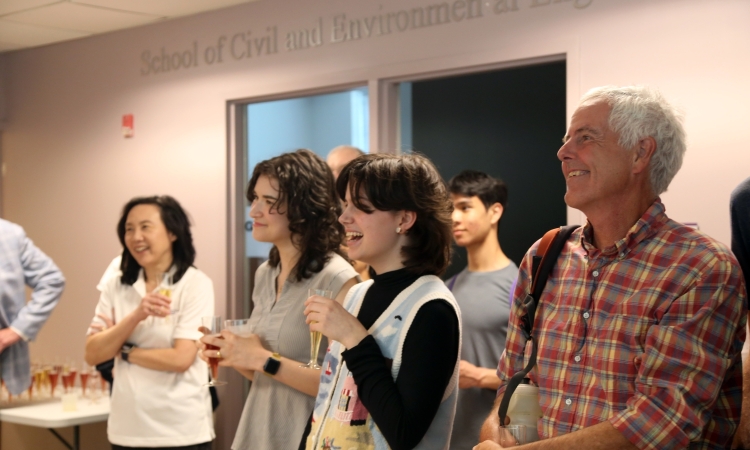
Earlier this year, Boswell spoke at a celebration recognizing the program’s 20th anniversary and its No. 1 ranking. A group of students, faculty members, retired professors, and alumni from around the country gathered at the Ford Environmental Science & Technology Building to mark the occasion.
Joining online from Texas, Boswell said that environmental engineering is a field where you can make an impact quickly if you’re willing to step outside of your comfort zone.
“My degree and my time at Georgia Tech really prepared me to be at the center of some of the most important challenges that businesses, communities and governments are facing, and that’s really exciting,” Boswell said.
Building on a Legacy
Over the years, the environmental engineering program has evolved to keep up with emerging technologies and changes in the field. For example, Russell said the growth of biomolecular environmental engineering — using cellular organisms — and evolving applications for sensors and nanotechnology have changed how engineers address environmental challenges.
The large size of the School’s environmental engineering program means Georgia Tech has deep expertise in all aspects of environmental engineering, including the newest technologies and approaches.
“We continue to have world-class expertise in air, water, and bio-environmental engineering,” Russell said. “Our size says we can be really, really good and have leading programs in each one of these areas.”
Over the last two decades, students who have graduated from Georgia Tech’s undergraduate environmental engineering program have made their mark across industry and academia.
“We have students who have gone to the very top programs in the country, as faculty,” Russell said. “They’ve become industry leaders in their areas. Many started their own companies. That is truly what I am most proud of.”
(text and background only visible when logged in)
View Photos
See photos from the environmental engineering 20th anniversary and No. 1 ranking celebration
One of those alumni is Shannon Evanchec, a 2016 graduate. Her work in an environmental engineering lab with fellow CEE alumna Sam Becker led them to found a company together focused on drinking water quality and infrastructure. Now they have projects with communities in 22 states addressing drinking water challenges such as contamination from lead and emerging issues like PFAs, the so-called “forever chemicals.”
“These problems are not going away,” Evanchec said. “The urgency of those problems is going to continue to grow, and so are the opportunities within environmental engineering. Twenty years is an awesome achievement for Georgia Tech, but it also feels like it’s just getting started. I can’t wait to see what the program accomplishes over the next 20 years.”