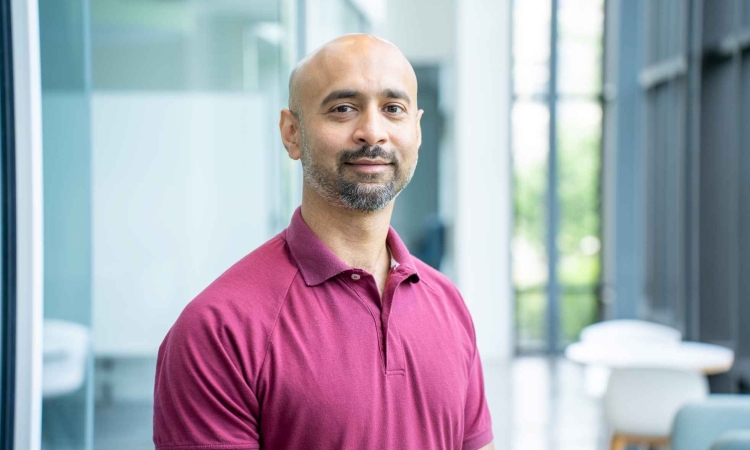
Chris C. Martin

Director of Collaborative Innovation
Academic Professional
Telephone
Office Building
Mason
Office Room Number
2247
Biography

Dr. Chris C. Martin is Director of Collaborative Innovation in the School of Civil and Environmental Engineering. He obtained a BA in psychology in 1999 from Davidson College, followed by an MS in human-computer interaction in 2000 from Georgia Tech. After a career in user experience and web design, he earned an MA in experimental psychology at the College of William and Mary, and a PhD in sociology from Emory University. He did post-doctoral work at the School of Biomedical Engineering at Georgia Tech after his PhD, and served as lecturer in psychology and core studies at Oglethorpe University until December 2024. 

Research

Dr. Martin primarily conducts research on happiness and wellbeing, but he has also conducted research on topics relevant to teamwork in engineering, including organizational justice, inclusion, psychological safety, and peer evaluations. He has published a few studies in various other fields including political psychology, management, and public health.  

Education

BA                           Davidson College                              1999

MS                          Georgia Tech                                     2000

MA                          College of William and Mary              2012

PhD                         Emory University                               2017

Teaching

Dr. Martin has taught a special topics course on happiness and wellbeing since 2015 at a number of universities including Georgia Tech. He also teaches a graduate-level course on the psychology of collaboration, directed at engineering majors. He is on the instructional team for required courses and electives in the undergraduate civil and environmental program such as CEE 1090: Exploring Civil and Environmental Engineering and CEE 2090: Civil and Environmental Engineering Systems. 

Distinctions & Awards


  • Society of Experimental Psychology (SESP) Fellow, 2025 
  • SPSP Small Research Grant Awardee, 2020 


Publications
  1. Martin, C. C. & Newstetter, W. (in press). Overall peer justice predicts inclusion in student teams in biomedical engineering. Biomedical Engineering Education.  
  2. Martin, C. C., Lockley, A., Hendricks, S., Clark, C., Mundra, I., & Matzner, N. (2025). Women climate scientists are connected, productive, and successful, but have shorter careers. PNAS, 122, e2506023122. https://doi.org/10.1073/pnas.2506023122 
  3. Martin, C. C. & Jarden, A. (2024). The Cultural Meaning of Time Mismatch at Work: Contrasting Asians with Whites. New Zealand Journal of Psychology, 53, 18-29. https://doi.org/10.63146/001c.138412 
  4. Clark, C. J., Jussim, L., Frey, K., Stevens, S. T., al-Gharbi, M., Aquina, K. … Martin, C. C., ,,,, (2023). Prosocial motives underlie scientific censorship by scientists: A perspective and research agenda. PNAS, 120, e2301642120. https://doi.org/10.1073/pnas.2301642120 
  5. Martin, C. C. (2023). Missing Base Rates as a Cause of Misinterpretation: A Commentary on Roberts et al. (2020). Meta-Psychology, 7, MP.2021.2910. https://doi.org/10.15626/MP.2021.2910 
  6. Bianchi, E. C., Martin, C. C., & Li, R. (2023). Does job satisfaction rise during recessions? Cross-sectional, longitudinal, and experimental evidence that job satisfaction increases in bad economic times. Academy of Management Journal, 66, 688-709. https://doi.org/10.5465/amj.2019.0405 
  7. Locke, K. D. & Martin, C. C. (2022). Evaluating an Abbreviated Version of the Circumplex Team Scan Inventory of Within-Team Interpersonal Norms. European Journal of Psychological Assessment, 40, 184-194. https://doi.org/10.1027/1015-5759/a000752 
  8. Martin, C. C. & Butera, C. (2022). Can brief interventions improve functioning in student dyads? Journal of Articles in Support of the Null Hypothesis, 19(1), 1-12. 
  9. Martin, C. C. & Locke, K. D. (2022). What do peer evaluations represent? A study of rater consensus and target personality. Frontiers in Education. https://doi.org/10.3389/feduc.2022.746457 
  10. Martin, C. C., & Zyphur, M. J. (2022). Justice and inclusion mutually cause each other. Social Psychological and Personality Science, 13, 512-521. https://doi.org/10.1177/19485506211029767  

In the News