

Associate Vice President for Research Operations and Infrastructure,
Dwight H. Evans Professor
Biography
Susan E. Burns, Ph.D., P.E., F.ASCE is the Dwight H. Evans Professor in the School of Civil and Environmental Engineering and interim Associate Vice President for Research Operations and Infrastructure at the Georgia Institute of Technology in Atlanta, Georgia, USA. She currently serves as the 2025-2026 President of the Geo-Institute of the American Society of Civil Engineers, an organization of approximately 12,000 geoprofessionals working across the world.
Dr. Burns earned a B.C.E. Civil Engineering (‘90), M.S. Civil Engineering (‘96), M.S. Environmental Engineering (‘96), and Ph.D. in Civil Engineering (‘97), all from Georgia Tech. Dr. Burns’ research focuses on applications in geoenvironmental engineering including sustainability and beneficial use of waste materials, bio-mediated ground improvement, and fundamental chemical and engineering behavior of soils.
Dr. Burns is a past member of the National Academies of Sciences, Engineering, and Medicine standing Committee on Geological and Geotechnical Engineering, and has served on the Academy study committees for: Assessment of the Performance of Engineered Waste Containment Barriers and Corrosion of Buried Steel at New and In-Service Infrastructure. Dr. Burns previously served twelve years as Associate School Chair in Civil and Environmental Engineering, in positions as undergraduate chair and as administration and finance chair and she is a past president of the United States Universities Council on Geotechnical Education and Research.
Dr. Burns is a fellow of the American Society of Civil Engineers, a recipient of the National Science Foundation CAREER award, and she was named the 2020 Engineer of the Year by the Georgia Society of Professional Engineers (NSPE-GA). In 2021, Dr. Burns received the Class of 1940 W. Howard Ector Outstanding Teacher Award, which is Georgia Tech’s highest award for teaching.
Research
Burns research interests include sustainability and beneficial use of waste materials, bio-mediated ground improvement and fundamental chemical and engineering behavior of soils.
Education
| Ph.D. Civil Engineering | Georgia Institute of Technology | 1997 |
| M.S. Environmental Engineering | Georgia Institute of Technology | 1996 |
| M.S. Civil Engineering | Georgia Institute of Technology | 1996 |
| B.C.E. Civil Engineering | Georgia Institute of Technology | 1990 |
Teaching
Dr. Burns teaches courses in geotechnical engineering (undergraduate), ground improvement (graduate), and landfill design and management (graduate). Throughout all her courses, she interweaves concepts of the fundamental geochemical and mechanical behavior of soils and waste materials within an overall context of sustainability to develop a practical framework for minimized waste generation and beneficial use of waste materials.
Distinctions & Awards
- 100 Influential Women in Georgia Engineering, Engineering Georgia Magazine 2022, 2024
- Class of 1940 W. Howard Ector Outstanding Teacher Award, Georgia Tech, 2021
- 2020 Engineer of the Year, Georgia Society of Professional Engineers, NSPE-GA
- Fellow, American Society of Civil Engineers Elected, 2013
Publications
- Choe, Y. Cho, S. Kim, C., Won, J., and Burns, S.E. (2025). Nonionic polyacrylamide-clay interaction: insight from sedimentation experiments and viscosity, Journal of Environmental Chemical Engineering, 118597, doi.org/10.1016/j.jece.2025.118597.
- Kim, J., Choo, H., Yoon, B. and Burns, S.E. (2025). Experimental study on the swelling pressure of compacted bentonite under high temperatures above 100 °C, Geomechanics for Energy and the Environment, Volume 42, 2025, https://doi.org/10.1016/j.gete.2025.100671.
- Shivaprakash, S.H., Yanez, V.R., Graddy, C.M.R., Gomez, M.G., DeJong, J.T., and Burns, S.E. (2025). Effect of natural carbonates on microbially induced calcite precipitation process. Scientific Reports, 15, 13290 (2025). https://doi.org/10.1038/s41598-025-97737-2.
- Shivaprakash, S.H. and Burns, S.E. (2025). Microbial interactions during calcite biomineralization via urea hydrolysis metabolic pathway, 4, (11) Acta Geotechnica, https://doi.org/10.1007/s11440-025-02609-8.
- Huang, H., Burns, S.E., Benkeser, D., and Kurtis, K.E. (2025). Life Cycle Assessment of Dredged River Sediments: Beneficial Use as Non-Structural Fill and Supplementary Cementitious Materials, Indian Geotechnical Journal.
- Choe, Y., Won, J., and Burns, S.E. (2025). Impact of Particle Size and Oxide Phase on Microplastic Transport Through Iron Oxide-Coated Sand, Water Research, Volume 271, doi.org/10.1016/j.watres.2024.122856.
- Gray, K.S., Won, J. and Burns, S.E. (2024). A Framework for Estimating Soil Water Characteristic Curve and Hydraulic Conductivity Function of Permeable Reactive Media, Chemosphere, Volume 355, https://doi.org/10.1016/j.chemosphere.2024.141758.
- Garcia, E., Liu, P. Sanchez, J., Lee, S. Wang, Q., Wen, Y., Shivaprakash, S., Burns, S., Tang, Y. (2024). A survey study on arsenic speciation in coal fly ash and insights into the role of coal combustion conditions, Applied Geochemistry, Volume 170, https://doi.org/10.1016/j.apgeochem.2024.106095.
- Byeonguk R., Park, J., Burns, S., Choo, H. (2022). Stress–Deformation Response of Rigid–Soft Particulate Mixtures under Repetitive Ko Loading Conditions, Transportation Geotechnics, https://doi.org/10.1016/j.trgeo.2022.100835.
- Won, J. and Burns, S.E. (2022). Role of ionic concentration in the kinetic attachment of kaolinite and sand, Canadian Geotechnical Journal, https://doi.org/10.1139/cgj-2021-0682.
In the News
Students say 4 of the top teachers at Tech are civil and environmental engineering professors
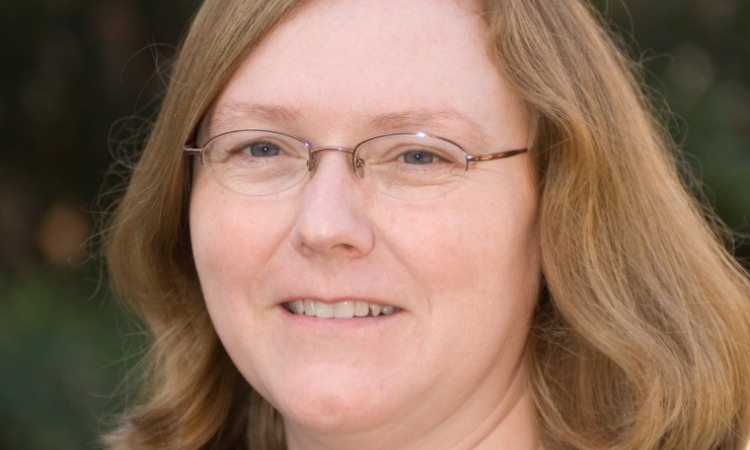
Burns honored as one of Tech’s most effective teachers