Turnipseed Family Chair & Professor
Biography
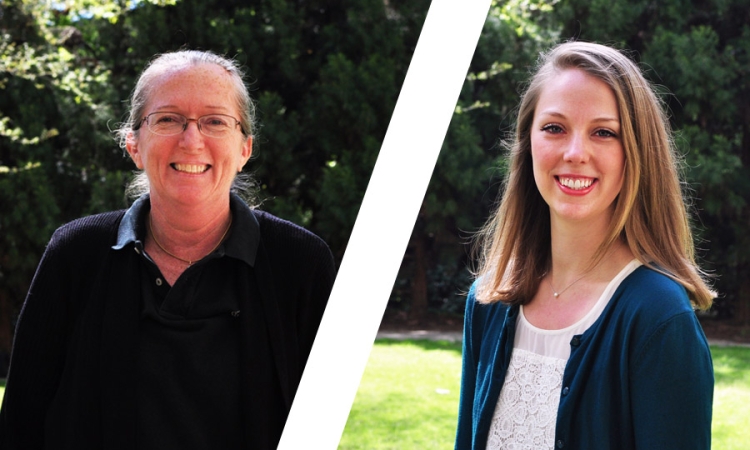
Dr. Ching-Hua Huang is the Turnipseed Family Chair and Professor in the School of Civil and Environmental Engineering at the Georgia Institute of Technology, where she has served on the faculty for more than 25 years. Her research and teaching expertise encompass environmental chemistry, advanced water treatment technologies, contaminants of emerging concern, and resource recovery of critical minerals. Dr. Huang has authored over 175 peer-reviewed publications in leading scientific journals and has led numerous research projects supported by federal and state agencies as well as industry partners. Her work has been widely cited and recognized with prestigious honors, including the 2024 Prince Sultan Bin Abdulaziz International Prize for Water, the 2022 CAPEES/Nanova Lifetime Achievement Award, multiple best paper awards from American Chemical Society journals, and several distinguished visiting professorships at U.S. and international universities. She is a long-standing member of the Editorial Advisory Board of Environmental Science & Technology and currently serves as an Associate Editor for ACS ES&T Water.
Research
Dr. Huang’s research interests span water quality engineering and resource recovery. Her work focuses on the fate and removal of contaminants of emerging concern, advanced (photo)oxidation and reduction treatment processes, and alternative oxidants and disinfectants for water treatment. She is also an expert in the recovery of critical minerals from alternative sources, with extensive research in source characterization and the development of novel separation technologies.
Education
| Ph.D. | Johns Hopkins University | 1997 |
| M.S. | Johns Hopkins University | 1992 |
| B.S. | National Taiwan University | 1990 |
Teaching
Dr. Huang’s teaching interests center on environmental engineering and chemistry at both undergraduate and graduate levels. Her instruction emphasizes chemical principles for environmental systems, contaminant fate and behavior, engineering treatment technologies, and related analytical methods. Her teaching aims to provide students with a rigorous understanding of fundamental reactions across environmental compartments and engineering systems through collaborative learning and real-world problem-solving within core curricula.
Publications
- Liu, Ting; Huang, C.-H. 2026. Sustainable extraction of rare earth elements from coal fly ash leachates using a recyclable ionic liquid, npj Materials Sustainability, 4:2.
- DiLoreto, Samantha; He, Huanqi; Yang, Jinhao; Milne, Patrick; Li, Jiaqi; Impellitteri, Christopher A.; Stubbins, Aron; Pinto, Ameet; Huang, Ching-Hua. 2025. Identification of factors influencing variability in disinfection byproducts and their toxicity in chlorinated and chloraminated drinking water distribution systems across the United States, Environmental Science & Technology, ASAP article published online.
- Xin, Xiaoyue; Li, Jiaqi; Huang, Ching-Hua. 2025. Far-UVC (222 nm) Enhances the Advanced Reduction Process for Per- and Polyfluoroalkyl Substances (PFAS) Destruction, ACS ES&T Water, 5 (10), 6048-6057.
- Kim, Juhee; Xin, Xiaoyue; Hawkins, Gary, L.; Huang, Qingguo; Huang, Ching-Hua. 2024. Occurrence, Fate and Removal of Per- and Polyfluoroalkyl Substances (PFAS) in Small- and Large-Scale Municipal Wastewater Treatment Facilities in the United States, ACS ES&T Water, 4 (12), 5428-5436.
- Liu, T.; Hower, J. C.; Huang, C.-H. 2023. Recovery of Rare Earth Elements from Coal Fly Ash with Betainium Bis(trifluoromethylsulfonyl)imide: Different Ash Types and Broad Elemental Survey, Minerals, 13(7), 952.
In the News
Amekudzi-Kennedy on Georgia infrastructure report card: Progress made, more to be done
New CDC-sponsored research seeks to understand water-related risks of antibiotic use in agriculture